
In less than a month, a political satire launched by a young Indian living in the United States has transformed into a nationwide movement that is forcing politicians, journalists and policymakers to pay attention.
The Cockroach Janta Party (CJP), founded by Abhijeet Dipke on May 16, 2026, began as a response to a controversy surrounding remarks attributed to Chief Justice Surya Kant. What began as a satirical online campaign quickly evolved into a movement that attracted national attention, drawing millions of followers and sparking debate around unemployment, examination controversies and public accountability.
Bloomberg reported that the movement has already amassed more than 22 million followers on Instagram, making it one of the fastest-growing political or social movements in India's recent digital history.
But what exactly is the Cockroach Janta Party, who is behind it, and why has it captured the attention of so many young Indians?
What Is The Cockroach Janta Party?

Despite its name, the Cockroach Janta Party is not currently a registered political party.
The movement describes itself as a youth-led platform that uses satire, humour and digital activism to highlight issues affecting young Indians. Its official slogan, "Voice of the Lazy & Unemployed," deliberately embraces labels often used to dismiss younger generations.
The official Cockroach Janta Party website describes the platform as a space for young people who feel excluded from mainstream political conversations. While its tone is intentionally satirical, its supporters argue that the concerns it raises are serious.
The organisation is not recognised by the Election Commission of India and has not announced plans to contest elections. Instead, founder Abhijeet Dipke has repeatedly described the initiative as a pressure group designed to push for accountability and institutional reform.
The movement stands out because it has converted internet satire into real-world civic mobilisation. While many online campaigns fade quickly, the CJP has transformed online attention into public discussion, media coverage and organised demonstrations.
How Did The Movement Begin?
The origins of the Cockroach Janta Party can be traced to a controversy that emerged during a Supreme Court hearing in May 2026.
Bloomberg reported that widespread criticism followed remarks attributed to Chief Justice Surya Kant that many social media users interpreted as comparing unemployed youth to "cockroaches" and "parasites." The comments triggered intense debate online and became a rallying point for young Indians already frustrated by economic uncertainty and employment challenges.
The following day, Abhijeet Dipke launched a satirical website and social media campaign called the Cockroach Janta Party.
Rather than rejecting the term, the movement embraced it.
Supporters began identifying themselves as "cockroaches" in a symbolic act of protest, turning what many perceived as an insult into a badge of solidarity. The campaign quickly gained traction across social media platforms, with memes, videos and personal stories helping fuel its growth.
Chief Justice Surya Kant later clarified that his remarks had been misquoted and were directed at individuals using fake and fraudulent degrees rather than unemployed youth as a whole. Nevertheless, by that point the movement had already captured national attention.
Who Is Abhijeet Dipke?
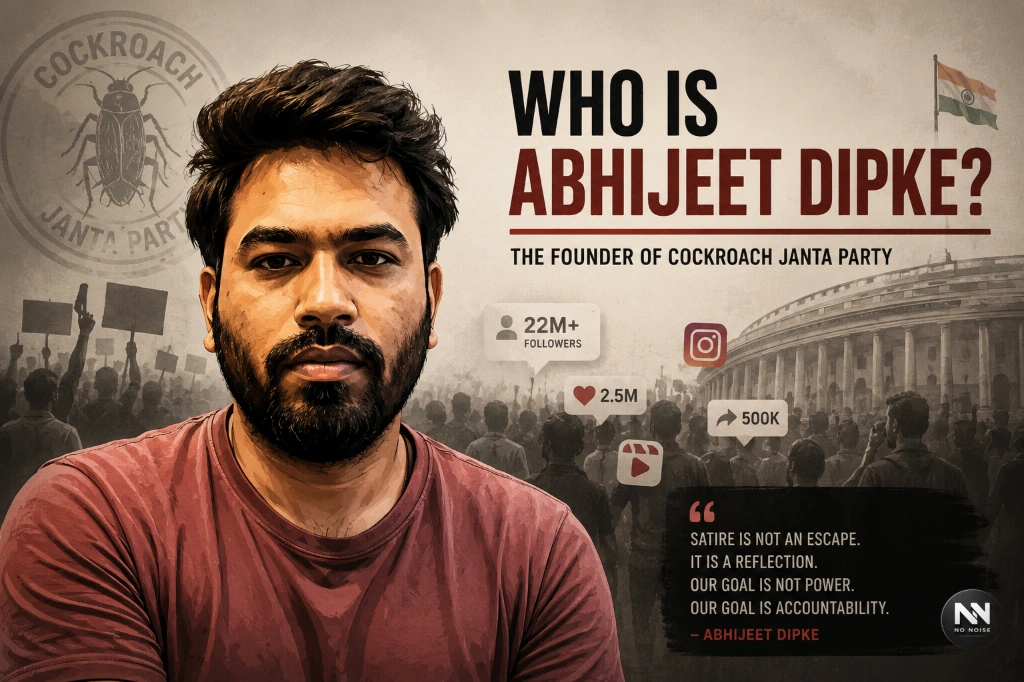
At the centre of the movement is Abhijeet Dipke, a communications professional whose background has become a subject of growing public interest.
Reuters and publicly available biographical information indicate that Dipke was born in Aurangabad, Maharashtra, studied journalism in India and later completed a Master of Science degree in Public Relations from Boston University in the United States.
Before moving abroad, he worked with the Aam Aadmi Party's social media operations between 2020 and 2023 and also contributed to communications work connected with Delhi's education initiatives.
Dipke has consistently maintained that the Cockroach Janta Party was originally conceived as satire. However, he argues that the overwhelming response from young Indians revealed deeper concerns that could no longer be ignored.
Speaking to international media outlets, Dipke has said that the movement's goal is not necessarily to become a conventional political party but to create a platform capable of holding institutions accountable and amplifying issues affecting younger generations.
Why Has The Movement Gone Viral?

The extraordinary growth of the Cockroach Janta Party cannot be explained by satire alone.
Reuters noted that the movement's popularity reflects a combination of economic anxiety, youth unemployment, examination controversies and a broader sense of political frustration among younger Indians.
India remains one of the world's fastest-growing major economies. Yet many young graduates continue to struggle with employment, underemployment and career uncertainty.
Bloomberg reported that concerns about job opportunities have become a central issue for many members of Generation Z, particularly those entering the workforce after years of academic preparation.
For many supporters, the Cockroach Janta Party provides something traditional political organisations often fail to offer: a language that reflects their frustrations.
The movement's social media content frequently combines humour with criticism of governance, bureaucracy and institutional failures. This approach has allowed it to connect with younger audiences who consume information differently from previous generations.
The Faces Behind The Movement
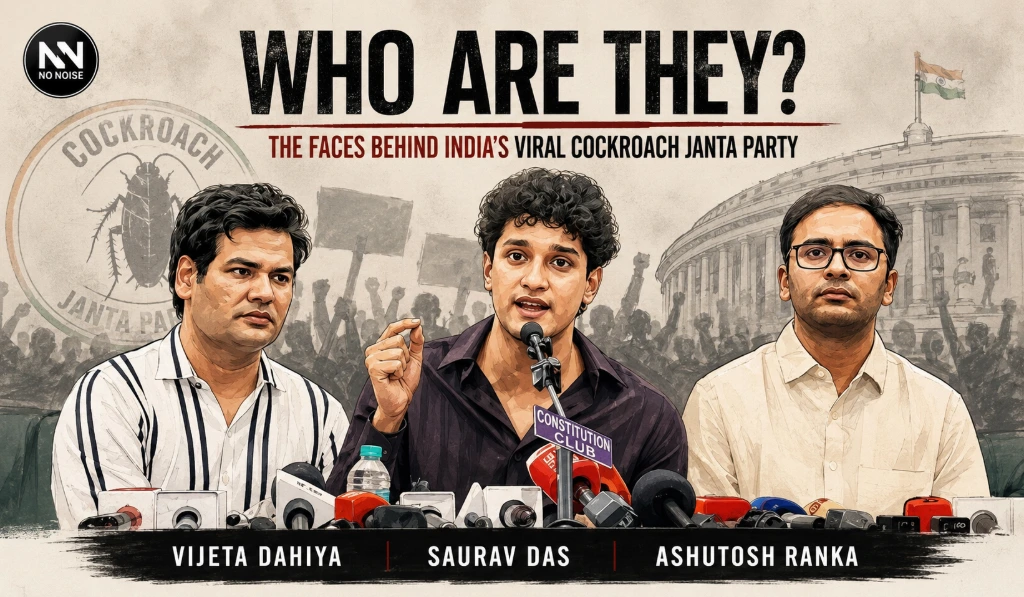
Although Abhijeet Dipke remains the movement's founder, several other individuals have emerged as public representatives of the organisation.
Reporting by The Hindu identifies filmmaker Vijeta Dahiya, journalist Saurav Das and spokesperson Ashutosh Ranka as some of the movement's most visible public representatives.
Dahiya has spoken about the importance of continuous democratic accountability rather than limiting citizen participation to elections every five years.
Das has focused on education-related concerns and has argued that repeated controversies involving examinations require greater institutional accountability.
Ranka, an alumnus of IIT Kanpur and the London School of Economics, has been vocal about issues involving educational administration, data security and examination systems.
Together, they represent a movement that is increasingly attempting to move beyond social media and establish a visible presence in public discourse.
Why Is Education At The Centre Of The Movement?
One of the most important reasons for the movement's rapid growth is its focus on education-related controversies.
Reporting by The Hindu shows that the Cockroach Janta Party has centred much of its activism around concerns involving major examinations, evaluation systems and administrative failures.
The movement has repeatedly criticised authorities over issues linked to NEET, CBSE evaluation controversies and the reported exposure of candidate information connected to JEE Advanced.
These incidents have generated significant concern among students and parents, many of whom view competitive examinations as critical pathways to educational and professional advancement.
CJP leaders have argued that repeated controversies reflect deeper governance problems and have called for greater accountability within the education system.
The movement's most visible political demand so far has been the resignation of Union Education Minister Dharmendra Pradhan.
Supporters believe accountability must extend to the highest levels of government, while critics argue that systemic issues cannot be reduced to the responsibility of a single individual.
Regardless of where one stands politically, education has clearly become the issue around which the movement has built much of its momentum.
Protest Movement, Pressure Group Or Future Political Party?
A question frequently raised by observers is whether the Cockroach Janta Party intends to become a formal political party.
At least for now, there is little indication that the movement intends to contest elections.
In interviews cited by Bloomberg, Dipke has repeatedly stated that it is too early to determine whether the movement will eventually contest elections. For now, he describes the organisation as a pressure group focused on influencing public debate and demanding accountability.
Many social movements seek influence without seeking electoral power. Whether the Cockroach Janta Party follows that path or eventually evolves into something more traditional remains uncertain.
What is already clear, however, is that the movement has brought renewed attention to issues that resonate with many young Indians.
What Happens Next?
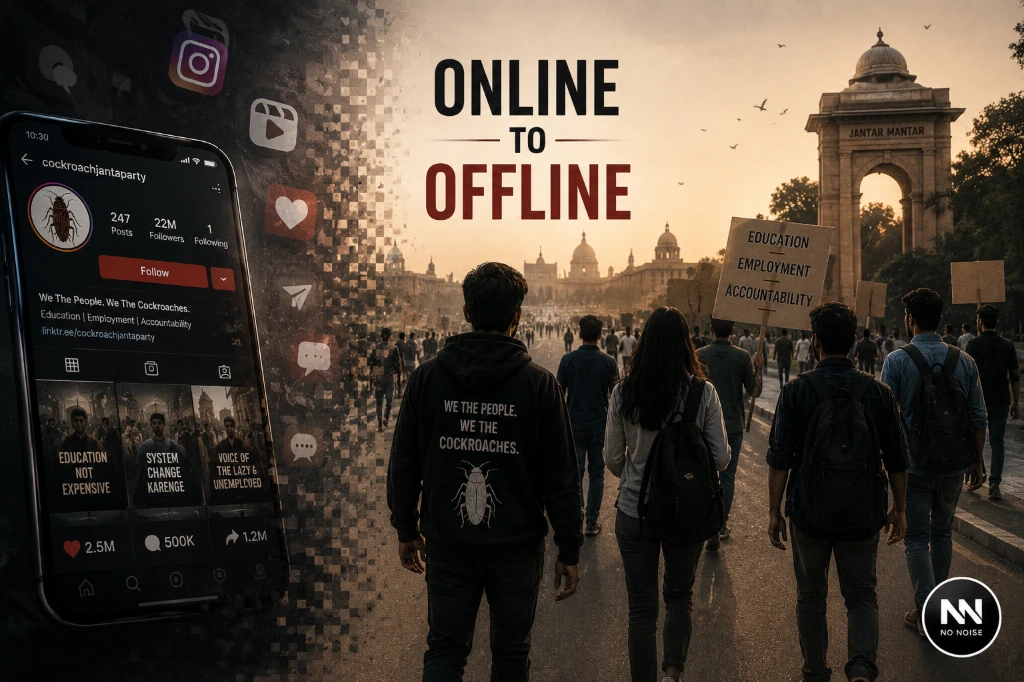
The next major test for the Cockroach Janta Party will be its ability to convert online visibility into sustained civic engagement.
Social media followers can create attention, but long-term influence typically requires organisation, leadership and continued participation beyond digital platforms.
The planned protest at Jantar Mantar in New Delhi represents the movement's most significant public mobilisation effort so far. It will provide an indication of whether the energy that fuelled the movement online can translate into real-world participation.
Few movements in recent years have grown as rapidly as the Cockroach Janta Party, making it one of the most closely watched youth-led campaigns of 2026.
What began as a satirical response to a controversial remark has evolved into a broader conversation about unemployment, education, accountability and the relationship between India's younger generation and its institutions.
Whether it ultimately becomes a lasting force or a temporary phenomenon, the movement has already succeeded in doing one thing: forcing millions of people to ask questions that many believe have gone unanswered for far too long.
Latest Development: June 6 Protest Draws Public Support

The Cockroach Janta Party's first major offline mobilisation took place on June 6 at Jantar Mantar in New Delhi, marking a significant moment in the movement's evolution from a viral social media phenomenon to a real-world public campaign.
The Hindu reported that CJP founder Abhijeet Dipke attended the demonstration alongside spokespersons Saurav Das and Vijeta Dahiya. Climate activist Sonam Wangchuk also joined the gathering, lending additional visibility to the protest and its demands.
The demonstration focused on calls for greater accountability over recent examination-related controversies and renewed demands for the resignation of Union Education Minister Dharmendra Pradhan.
Despite heightened security arrangements in the national capital, the protest remained largely peaceful. Police briefly detained several participants during the day before the gathering concluded without any major incidents.
For supporters, the June 6 protest represented a significant milestone in the movement's evolution. The turnout suggested that the Cockroach Janta Party's appeal now extends beyond social media, demonstrating its ability to mobilise supporters in the real world.
Sources
- Bloomberg
- Reuters
- The Hindu (Protest Coverage)
- The Hindu (Education & Examination Coverage)
- Official Cockroach Janta Party Website