
With the conclusion of Mamata Banerjee’s tenure as Chief Minister, West Bengal closes one of the most defining political chapters in its modern history. For over a decade, her voice, leadership, and political presence shaped not only the governance of Bengal, but also the emotions, identity, and everyday conversations of millions across the state.
Love her or oppose her — Mamata Banerjee remained impossible to ignore.
From the streets of Kolkata to the national political stage, her journey became one of the most remarkable and influential political stories in contemporary India.
From Grassroots Politics to Bengal’s Highest Office
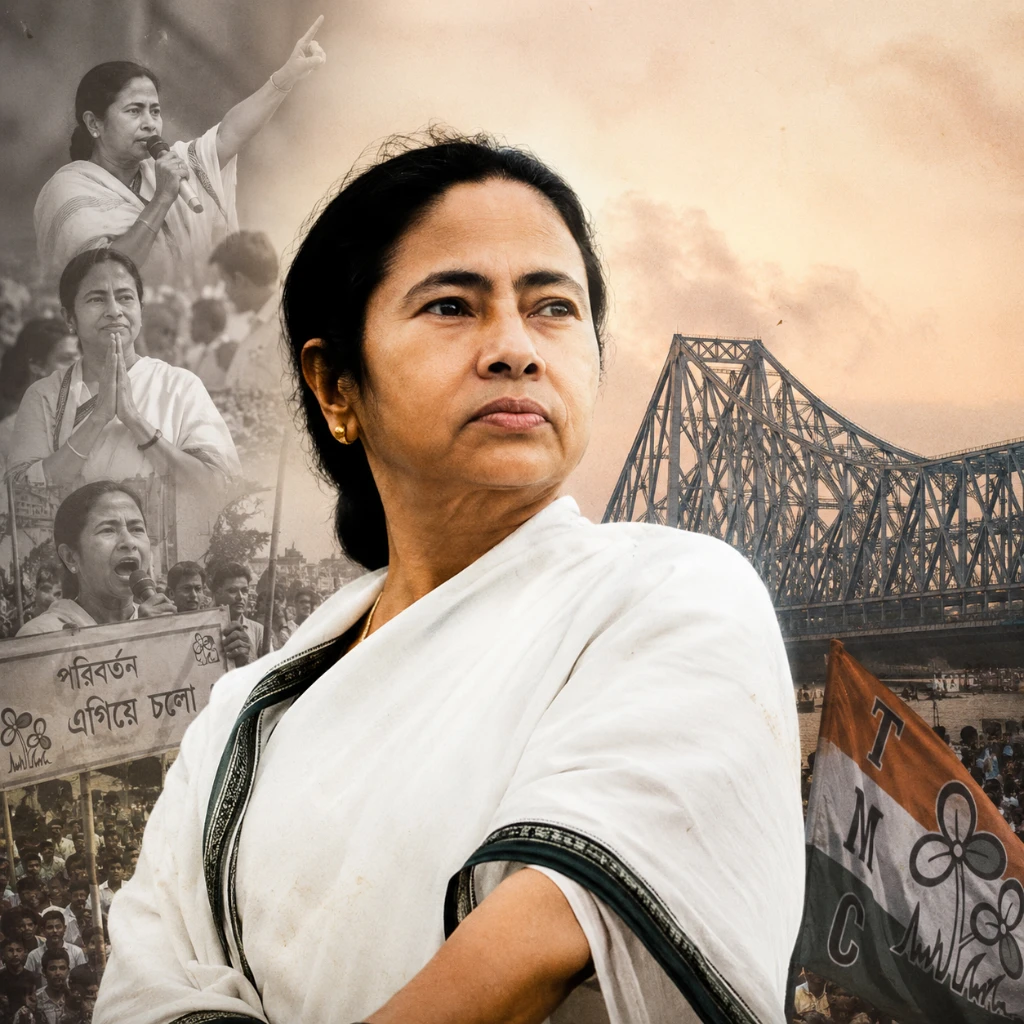
Born in Kolkata on January 5, 1955, Mamata Banerjee entered politics at a very young age. Rising through the Congress party during the 1970s and 1980s, she quickly became known for her aggressive street-level politics, public protests, and relentless campaigning style.
In 1984, she made national headlines by defeating veteran Communist leader Somnath Chatterjee in the Lok Sabha elections, becoming one of India’s youngest parliamentarians at the time. Over the years, she served multiple terms as a Member of Parliament and also held important positions in the Union Cabinet, including Railway Minister — becoming the first woman to hold that portfolio in India.
But her biggest political turning point came in 1998, when she founded the All India Trinamool Congress after breaking away from the Congress party. That decision would eventually change the political history of West Bengal forever.
The Fall of the Left and the Rise of “Didi”
For decades, West Bengal was considered the stronghold of the Left Front government. Mamata Banerjee emerged as its fiercest opponent.
Her movements against land acquisition in Singur and Nandigram transformed her from an opposition leader into the face of mass resistance in Bengal. The protests connected deeply with farmers, rural communities, and ordinary citizens who felt unheard during that period.
In 2011, Mamata Banerjee led the Trinamool Congress to a historic electoral victory, ending the 34-year rule of the Left Front government — one of the longest-serving elected communist governments in the world. She also became the first woman Chief Minister of West Bengal.
For many supporters, that victory symbolized political change, regional pride, and the rise of a leader who projected herself as a fighter for the common people.
Welfare Politics, Public Image, and Cultural Identity
During her tenure, Mamata Banerjee introduced several welfare schemes that became widely discussed across India. Initiatives such as Kanyashree, Lakshmir Bhandar, Swasthya Sathi, and student support programs played a major role in shaping her public image among women, students, and economically weaker communities.
Her leadership style was deeply personal and emotionally connected to Bengal’s cultural identity. Whether through poetry, paintings, public speeches, Durga Puja participation, or Bengali symbolism, she maintained a direct emotional connection with large sections of the population.
To supporters, she was “Didi” — a leader who spoke the language of the streets and remained accessible despite holding power.
A Political Career Marked by Both Praise and Criticism
Like every long political era, Mamata Banerjee’s tenure was also surrounded by criticism and controversy.
Opposition parties repeatedly questioned issues related to governance, political violence, corruption allegations, administrative handling of major incidents, and law-and-order concerns. Several national controversies and protests during her tenure kept Bengal under constant political attention.
Yet despite criticism, her political resilience remained one of her defining characteristics. Election after election, she continued to dominate Bengal’s political narrative and remained one of the most recognizable regional leaders in India.
The End of an Era
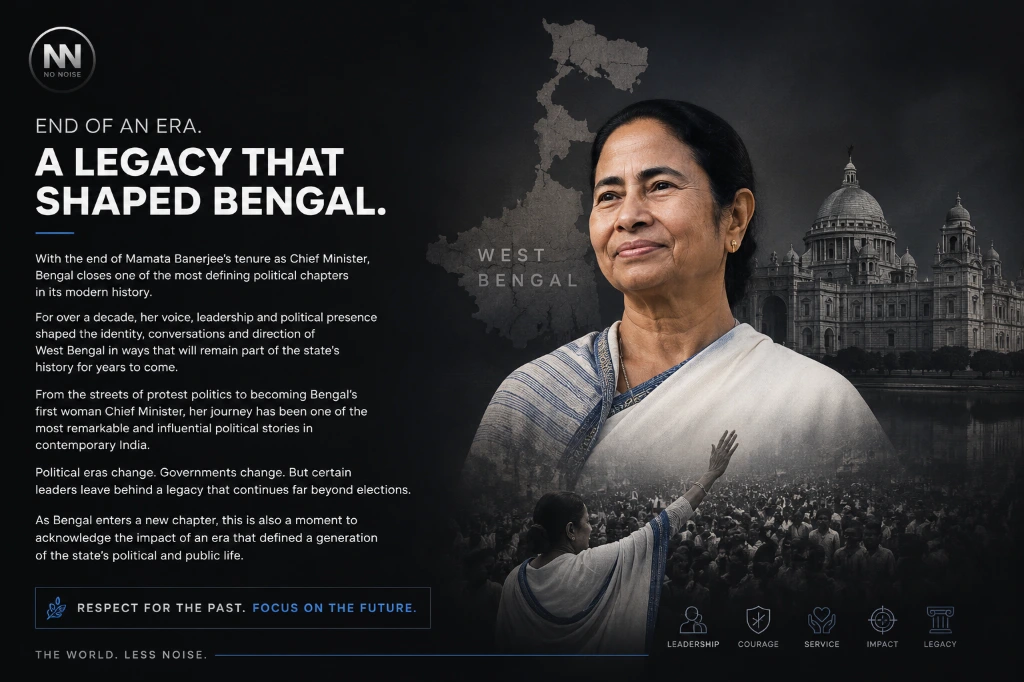
Political eras eventually change. Governments change. Public sentiment changes.
But certain leaders leave behind a legacy that extends far beyond elections.
For over fifteen years, Mamata Banerjee stood at the center of Bengal’s political identity — influencing its language, public culture, national image, and political direction. Whether remembered as a reformer, a fighter, a populist leader, or a controversial administrator, her impact on West Bengal cannot be denied.
As Bengal enters a new political chapter, this moment is not only about transition — it is also about acknowledging the end of an era that defined a generation.
Respect for history does not require political agreement.
It simply requires recognition.
Respect the past. Focus on the future.