
The death of social media personality Twisha Sharma has rapidly evolved into one of India’s most closely watched legal controversies, drawing nationwide attention across television debates, digital media platforms and social networks.
Over the past few days, the case has witnessed multiple major developments — including anticipatory bail proceedings involving her husband Samarth Singh, a court-approved second autopsy and a proposed transfer of the investigation to the Central Bureau of Investigation (CBI).
As public attention intensifies, the matter now stands at the intersection of law, media scrutiny and emotional public reaction.
What Is The Twisha Sharma Case?
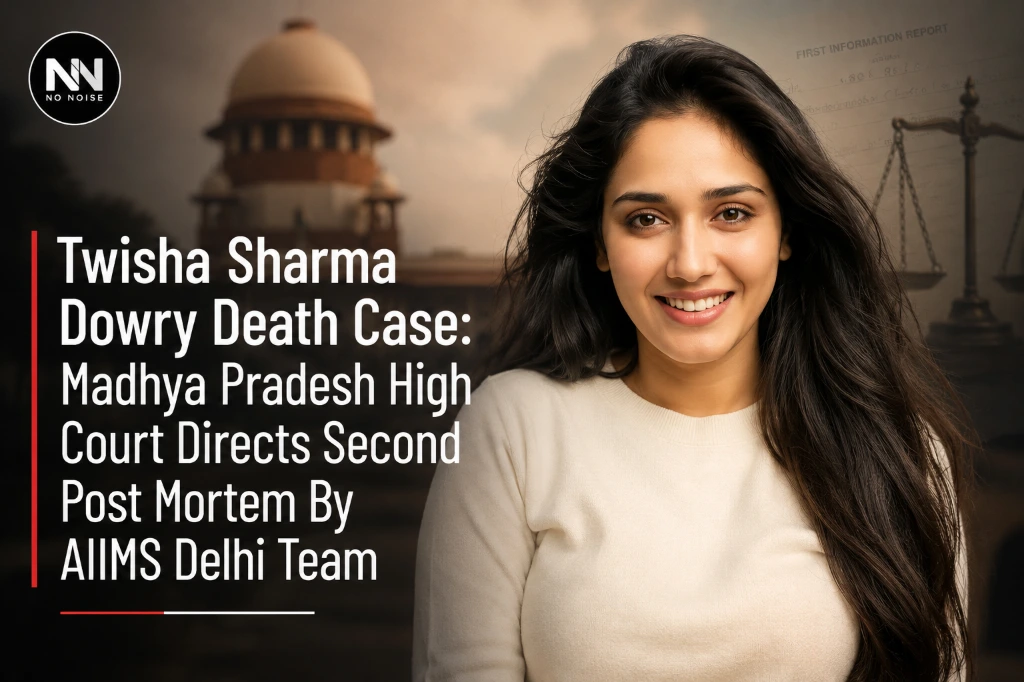
Twisha Sharma’s death triggered widespread outrage online after allegations related to dowry harassment began surfacing in legal discussions and media reports.
According to reports published by Live Law, legal proceedings connected to the case have drawn significant attention, particularly around anticipatory bail pleas and court observations involving her husband, lawyer Samarth Singh.
The issue quickly gained traction on social media, where hashtags, emotional reactions and public debates pushed the case into national headlines.
However, the matter remains under active legal and investigative review, and no court has established criminal liability at this stage.
High Court Clears Second Autopsy
One of the most significant developments came after the Madhya Pradesh High Court reportedly approved a second autopsy to be conducted by an AIIMS Delhi medical team.
The development was widely reported by NDTV, which stated that the second post-mortem examination was cleared amid growing public scrutiny surrounding the case.
In sensitive investigations involving disputed narratives and intense public attention, second autopsies are often considered important for strengthening transparency and reinforcing confidence in the legal process.
The move has further intensified national interest in the investigation.
Anticipatory Bail Proceedings Under Spotlight
The legal spotlight has also remained firmly on Samarth Singh’s anticipatory bail proceedings.
According to a report by The Times of India, Singh’s legal team informed the court that he was willing to surrender before the trial court, while objections were reportedly raised during proceedings by Solicitor General Tushar Mehta.
The courtroom developments have added further complexity to an already high-profile case.
As of now, the matter remains under judicial consideration, and no conclusions regarding guilt or innocence have been reached by the court.
MP Government Proposes CBI Investigation
In another major development, the Madhya Pradesh government has reportedly proposed transferring the case to the Central Bureau of Investigation.
The development was reported by The Hindu, which noted that the move could potentially place the investigation under broader national oversight.
If approved, a CBI inquiry would significantly elevate the scale and sensitivity of the case, bringing greater institutional scrutiny into the investigation process.
Calls for an independent probe have also gained momentum across social media platforms, where users continue demanding transparency and accountability.
The Rise Of Social Media Trials
Beyond the legal proceedings, the Twisha Sharma case also reflects a growing reality of the digital era — where public opinion often forms much faster than judicial conclusions.
Within hours, social media platforms transformed the incident into a nationwide discussion, with viral narratives, emotional reactions and allegations spreading at extraordinary speed.
While public pressure can amplify demands for accountability, legal experts have repeatedly cautioned against treating online discourse as judicial proof.
At a time when outrage often travels faster than verified facts, high-profile investigations increasingly face parallel trials across digital platforms.
Investigation Continues Amid National Attention
The Twisha Sharma case remains under active investigation, with authorities expected to continue examining forensic findings, witness statements, digital evidence and legal submissions in the coming days.
What initially began as a tragic personal incident has now evolved into a nationally discussed legal matter, attracting widespread public attention across news platforms and social media.
The possibility of a CBI investigation, combined with ongoing courtroom proceedings and the High Court’s direction for a second autopsy, has significantly intensified public scrutiny surrounding the case.
Legal experts have also pointed out that cases receiving massive online attention often face an additional layer of pressure — where public narratives begin forming long before judicial conclusions are reached.
Over the past few days, social media platforms have witnessed an explosion of emotional reactions, viral opinions and public debates related to the case. While many users continue demanding accountability and transparency, legal observers have repeatedly cautioned against treating online discourse as judicial proof.
At a time when digital outrage frequently moves faster than verified facts, high-profile investigations increasingly face parallel trials across online platforms.
As the legal process continues, the Twisha Sharma case is expected to remain under close national observation, with further developments likely to shape both public discussion and the direction of the investigation in the days ahead.
Sources
Editorial Note: The investigation remains ongoing, and no court has established criminal liability in the case at this stage.