
Written by Prashanth Choudary
For nearly two decades, the Indian Premier League has reinvented cricket repeatedly. It transformed player valuations, accelerated tactical innovation, changed how young cricketers are developed, and turned franchise cricket into one of the world's most influential sporting industries.
Yet even by IPL standards, the 2026 season felt different.
This was not merely another year of bigger sixes, louder stadiums, and larger television audiences. IPL 2026 represented a shift in how the game itself is played, analysed, and understood. Records fell at an unprecedented rate. Traditional assumptions about strategy were challenged. Teams increasingly relied on analytics rather than instinct. And a teenager from Bihar emerged as the face of a new generation of fearless cricketers.
Royal Challengers Bengaluru may have lifted the trophy, but the story of IPL 2026 extends far beyond a single champion. It was a season that revealed where modern cricket is heading—and how quickly that future is arriving.
The Era of Extreme Scoring

One statistic captures the transformation better than any other.
The average first-innings score during the league stage reached 191 runs. According to season-wide IPL 2026 match data compiled from official IPL records. Not long ago, a score around 180 was considered highly competitive in T20 cricket. In IPL 2026, teams often viewed it as merely par.
Across the tournament, batting reached levels rarely seen before. Boundaries arrived with astonishing frequency. Large totals no longer felt exceptional; they became routine. Teams regularly approached innings with the expectation that 200-plus scores were not only achievable but necessary.
This shift reflects a broader evolution in T20 cricket. Modern batters are no longer satisfied with preserving wickets and accelerating later. From the opening over, the objective is relentless scoring pressure.
The result was a season filled with dramatic swings. On some nights, teams posted totals that appeared impossible to chase. On others, targets that once seemed match-winning were overhauled comfortably.
What IPL 2026 demonstrated is that batting standards have permanently moved upward. The benchmark for success is no longer what it was five years ago. Teams that fail to adapt risk being left behind.
The Tactical Mistake Most Teams Kept Making

One of the most fascinating stories of the season emerged from a contradiction at the heart of modern T20 strategy.
Captains overwhelmingly preferred to chase after winning the toss. The logic seemed straightforward. Chasing allows teams to know exactly what target they need, manage risk more effectively, and adapt to conditions as the match unfolds.
However, the results told a different story.
Despite the strong preference for chasing, teams batting first frequently enjoyed greater success. Again and again, captains chose to field first only to discover that massive totals became increasingly difficult to pursue under pressure.
The explanation lies in the scale of scoring.
When first-innings totals consistently approach or exceed 190 runs, even a strong batting lineup can quickly find itself behind the required rate. One disciplined bowling spell, a few quiet overs, or the loss of an early wicket can transform a manageable chase into a daunting task.
IPL 2026 exposed the limits of conventional T20 thinking. Strategies that worked in previous seasons were not always effective in a tournament where scoring patterns had fundamentally changed.
The lesson was clear: cricket's evolution often moves faster than cricket's assumptions.
Analytics Is No Longer a Supporting Tool
For years, teams have spoken about data and analytics. Most franchises employed analysts, collected performance metrics, and used technology to support decision-making.
In IPL 2026, analytics appeared to move from the background to the centre of the game.
Teams increasingly relied on detailed matchup analysis, player impact measurements, and situation-based decision-making. Rather than evaluating players purely through traditional statistics, franchises focused on context.
A quick-fire 40 runs in a difficult chase might carry greater value than a slower half-century in comfortable conditions. A bowler who consistently creates pressure through dot balls may be more valuable than someone with similar wicket numbers but less control.
The season provided numerous examples of how franchises used data to shape their strategies.
Field placements became more specialised. Batting orders were adjusted according to opposition matchups. Bowling changes increasingly reflected statistical probabilities rather than intuition alone.
This trend mirrors developments across global sport. Football, baseball, basketball, and Formula One have all embraced data-driven decision-making. Cricket is now following the same path at an accelerating pace.
IPL 2026 suggested that future championships may be determined not only by talent, but by who interprets information most effectively.
The Rise of a New Cricketing Generation
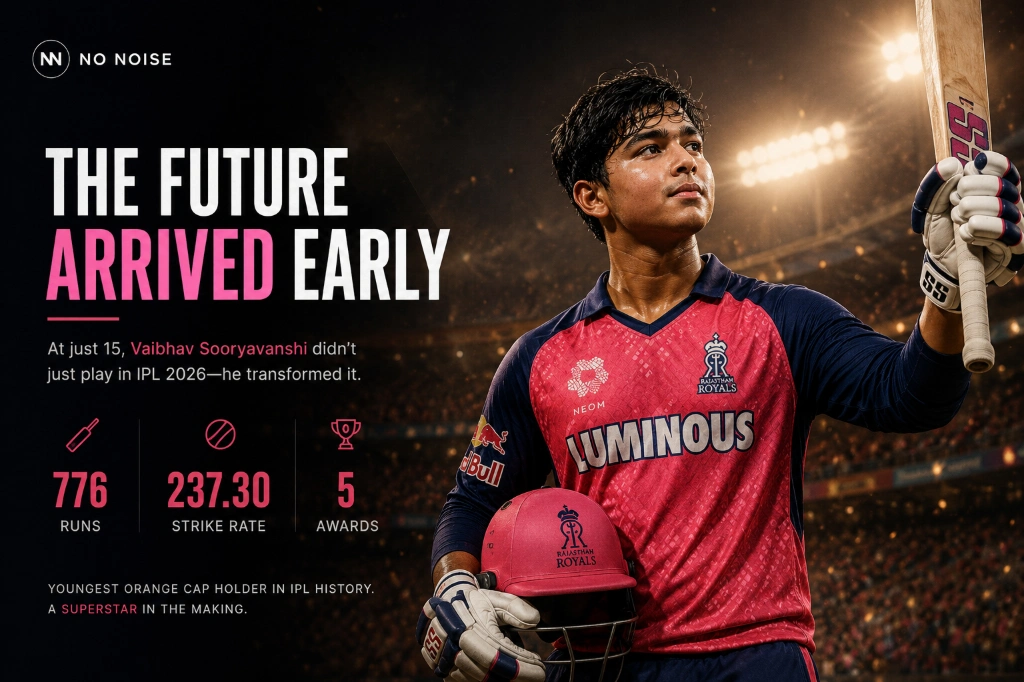
Every era produces a player who seems to belong to the future.
In IPL 2026, that player was Vaibhav Sooryavanshi.
At just fifteen years of age, he produced one of the most remarkable campaigns in the history of the tournament. His performances captured headlines, dominated conversations, and forced even experienced international players to acknowledge the arrival of a special talent.
What made his season extraordinary was not simply the volume of runs he scored. It was the manner in which he scored them.
Fearless shot-making, exceptional power, and a strike rate that consistently challenged conventional expectations transformed him into one of the tournament's defining figures. Opposition bowlers frequently appeared uncertain about how to contain him.
His achievements extended beyond individual innings. By the end of the season, he had accumulated a collection of awards that reflected his influence across multiple aspects of the competition.
More importantly, he represented a broader shift within Indian cricket.
Young players entering professional cricket today have grown up watching T20 leagues dominate the sporting landscape. They have been exposed to aggressive batting philosophies from childhood. High strike rates are not considered extraordinary—they are expected.
Sooryavanshi's success may be remembered as a symbol of this generational change.
How Royal Challengers Bengaluru Built a Modern Dynasty
While much of the attention focused on emerging stars, IPL 2026 also delivered a significant chapter in franchise history.
Royal Challengers Bengaluru successfully defended their title.
For a franchise that spent years battling disappointment and criticism, back-to-back championships represented a remarkable transformation. What was once considered one of the IPL's most underachieving teams has evolved into one of its most successful modern organisations.
The foundation of this success was balance.
RCB combined experienced leadership with tactical flexibility. Their batting lineup consistently produced runs while their bowling attack delivered control in conditions heavily favouring batters.
Virat Kohli once again played a central role.
Even after years at the highest level, his ability to perform in crucial moments remained evident. His contributions throughout the season reinforced his status as one of the defining figures in IPL history.
Yet RCB's success cannot be explained through individual brilliance alone.
The franchise appeared increasingly aligned with the modern direction of cricket—embracing analytics, maximising squad depth, and adapting strategically to changing conditions.
Their title defence may ultimately be viewed as evidence that sustained success in contemporary cricket requires more than star power. It requires organisational excellence.
Beyond Records and Trophies
The significance of IPL 2026 extends beyond champions, statistics, and individual awards.
The tournament offered a glimpse into cricket's future.
Batters continue to push the boundaries of scoring. Teams rely more heavily on data. Young players arrive with confidence and skills once associated only with experienced internationals. Strategic innovation evolves every season.
These developments raise important questions.
How will bowlers adapt to increasingly aggressive batting? Can traditional cricketing wisdom survive in a sport driven by analytics? What happens when players entering professional cricket have spent their entire lives in the T20 era?
IPL 2026 did not provide all the answers.
But it clearly demonstrated that the sport is entering a new phase.
The most successful teams will be those willing to embrace change rather than resist it.
The most successful players will be those capable of combining skill with adaptability.
And the most memorable seasons will continue to be those that challenge assumptions about what cricket can become.
A Season That Will Be Remembered
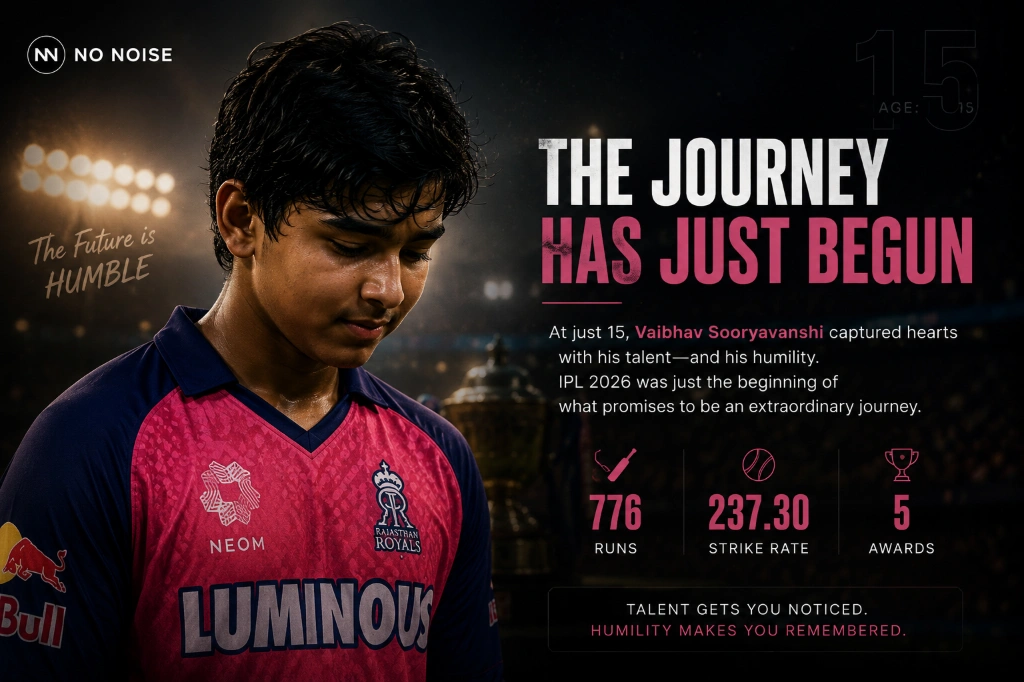
Every IPL season creates moments that endure.
Some are remembered for finals. Others for individual performances or dramatic rivalries.
IPL 2026 will likely be remembered for something larger.
It was the season in which cricket's future became visible.
A dominant champion confirmed its place among the league's elite. A teenage prodigy announced himself to the world. Data became as influential as instinct. Scoring reached unprecedented heights.
Years from now, when analysts discuss the evolution of franchise cricket, IPL 2026 may stand as a turning point.
Not because it broke records.
But because it revealed where the game is heading next.