
What initially appeared to be a contained medical emergency aboard an expedition cruise ship has rapidly evolved into an international public health concern involving multiple countries, global health agencies, and emergency response teams.
The outbreak, linked to the Dutch-flagged cruise vessel MV Hondius, has placed health authorities across Europe and North America on high alert after confirmed and suspected cases of hantavirus were identified among passengers and crew members traveling through the South Atlantic and Antarctic region.
Several passengers reportedly developed severe respiratory symptoms during the voyage, while multiple deaths linked to the outbreak have already been confirmed. As authorities continue tracing contacts and isolating potentially exposed travelers, the incident has once again demonstrated how quickly a localized health crisis can become an international concern in an interconnected world.
What Is Hantavirus?
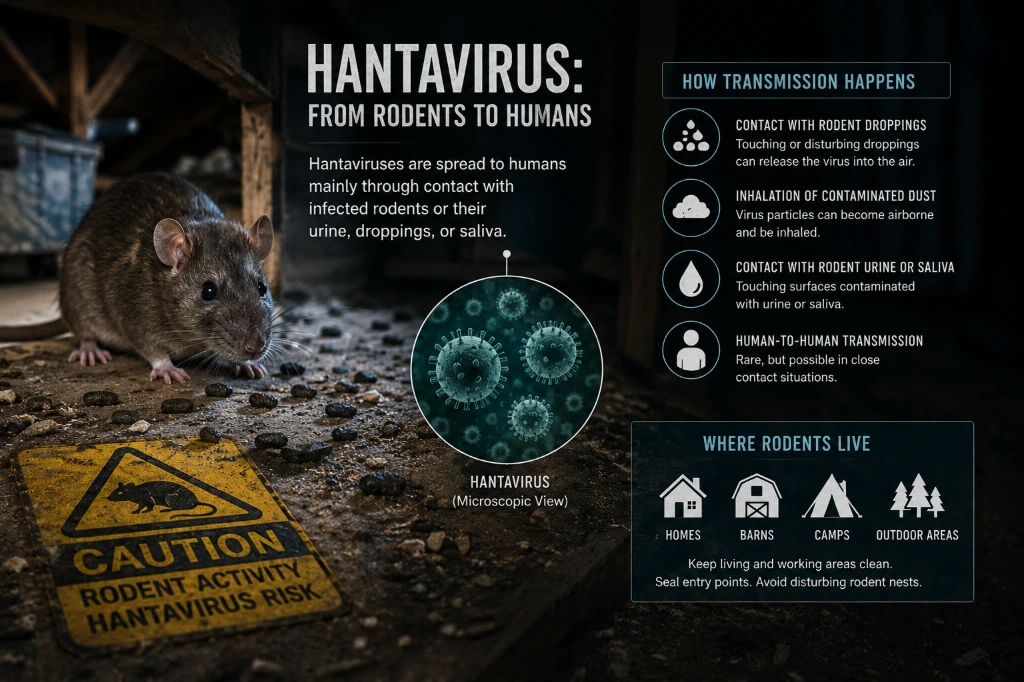
Hantaviruses are a group of rodent-borne viruses that can cause severe illness in humans, including hantavirus pulmonary syndrome — a potentially life-threatening respiratory disease. The virus is most commonly transmitted through contact with infected rodent urine, saliva, or droppings.
Most hantavirus strains do not spread easily between humans. However, the outbreak linked to the MV Hondius is believed to involve the Andes strain — one of the only known variants capable of limited person-to-person transmission under close-contact conditions.
That detail alone has significantly increased global concern.
Unlike airborne viruses such as COVID-19, hantavirus transmission typically requires prolonged close exposure. Even so, health officials remain cautious because cruise ships create confined environments where passengers spend extended periods together in shared spaces.
The Cruise Ship at the Center of the Crisis
The outbreak is linked to the MV Hondius, an expedition cruise vessel that departed from Ushuaia, Argentina, before traveling through parts of the Antarctic region and the South Atlantic. Investigators believe at least one passenger may have contracted the virus during earlier travel through Argentina or Chile, where hantavirus cases are periodically reported.
As symptoms began emerging onboard, several passengers reportedly required urgent medical attention. Multiple travelers later tested positive or were treated as suspected cases after disembarking in different countries.
Authorities are also investigating the possibility of limited human-to-human transmission aboard the ship — something considered highly unusual for hantavirus outbreaks.
The World Health Organization has since coordinated international monitoring efforts involving more than twenty countries connected to passengers and crew members from the voyage.
Global Monitoring and Quarantine Measures
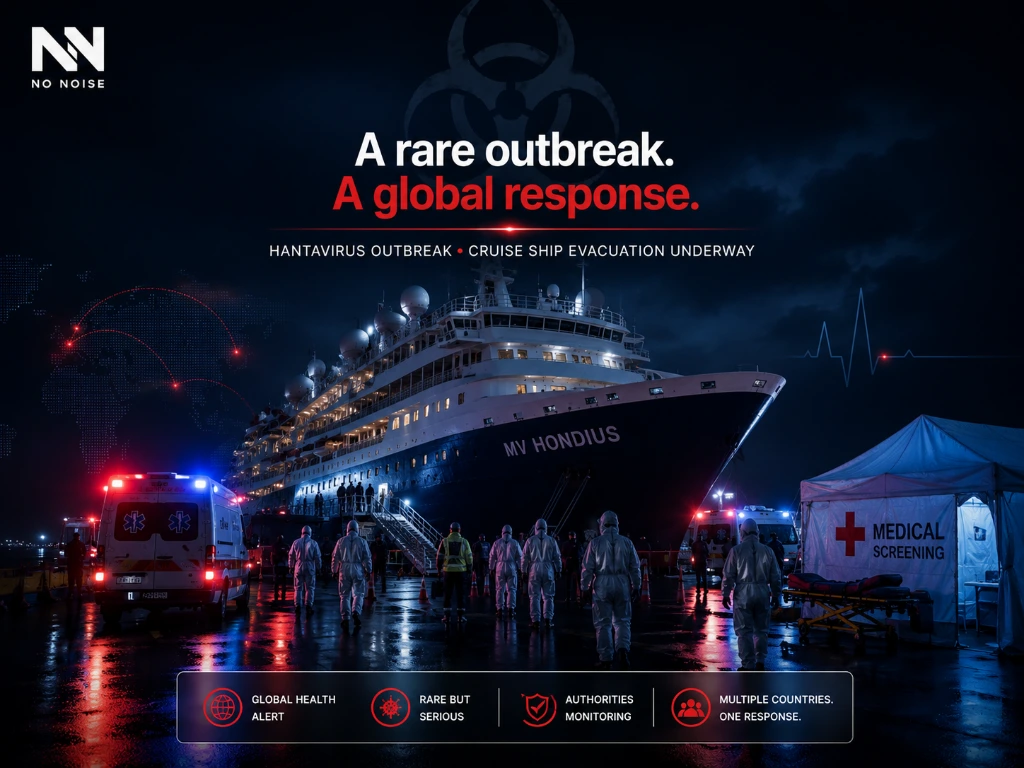
Passengers from the ship have now been traced across several countries, including the United States, the United Kingdom, France, the Netherlands, and South Africa. Multiple governments have activated isolation protocols, quarantine facilities, and emergency monitoring systems in response to the incident.
In the United States, exposed passengers were transported to specialized quarantine facilities in Nebraska and Atlanta, while additional monitoring continues across multiple states.
European authorities have also implemented strict contact-tracing measures after concerns emerged regarding possible protocol breaches during medical handling procedures.
Despite growing public attention, the WHO continues to state that the overall risk to the general public remains low. However, officials acknowledge that more cases could emerge due to the virus’s long incubation period, which can extend for several weeks.
Why This Outbreak Has Drawn Global Attention
Health experts continue to emphasize that this is not another COVID-style pandemic scenario. Nevertheless, the outbreak has raised important questions about modern outbreak preparedness, cruise ship safety protocols, and international coordination during cross-border health emergencies.
Unlike localized outbreaks in remote regions, the MV Hondius incident involved international travelers moving between countries before the outbreak was fully identified. That factor alone dramatically increased the complexity of containment efforts.
The crisis has also highlighted broader concerns surrounding global mobility in an era where diseases can rapidly cross borders through tourism, aviation, and international travel networks.
For many observers, the situation serves as a reminder that even rare diseases can create worldwide attention when they emerge in highly connected environments.
A World Still Sensitive to Health Emergencies
Years after the COVID-19 pandemic reshaped global public health systems, governments and medical agencies remain highly sensitive to emerging infectious disease threats.
That sensitivity partly explains why the hantavirus outbreak aboard a single cruise ship quickly escalated into a multinational health response involving quarantine operations, WHO coordination, and widespread media coverage.
For now, health officials continue to stress that the outbreak remains manageable and contained.
But the incident aboard the MV Hondius has once again demonstrated how fragile global health confidence remains — and how quickly isolated medical emergencies can evolve into international geopolitical and public health conversations.
Related Coverage
The World. Less Noise.