
The latest meeting between U.S. President Donald Trump and Chinese President Xi Jinping has once again pushed U.S.-China relations to the center of global attention. Held in Beijing over two days, the summit combined diplomacy, trade negotiations, political messaging, and geopolitical signaling at a time when the world economy remains deeply sensitive to tensions between Washington and Beijing.
While both leaders publicly projected optimism around economic cooperation, the summit also revealed how international diplomacy is increasingly intertwined with domestic political narratives — especially as the United States moves deeper into another intense election cycle.
According to CNBC, Trump invited Xi Jinping to visit Washington later this year, potentially setting up another major summit in September. At the same time, Trump repeatedly framed the Beijing meetings as proof that his administration was restoring American influence and rebuilding economic leverage against China.
The summit became one of the most closely watched international developments of the week, dominating global media coverage and triggering fresh discussions around trade stability, tariffs, supply chains, energy markets, and the future direction of U.S.-China relations.
Trump Returns To Beijing After Years Of Tension
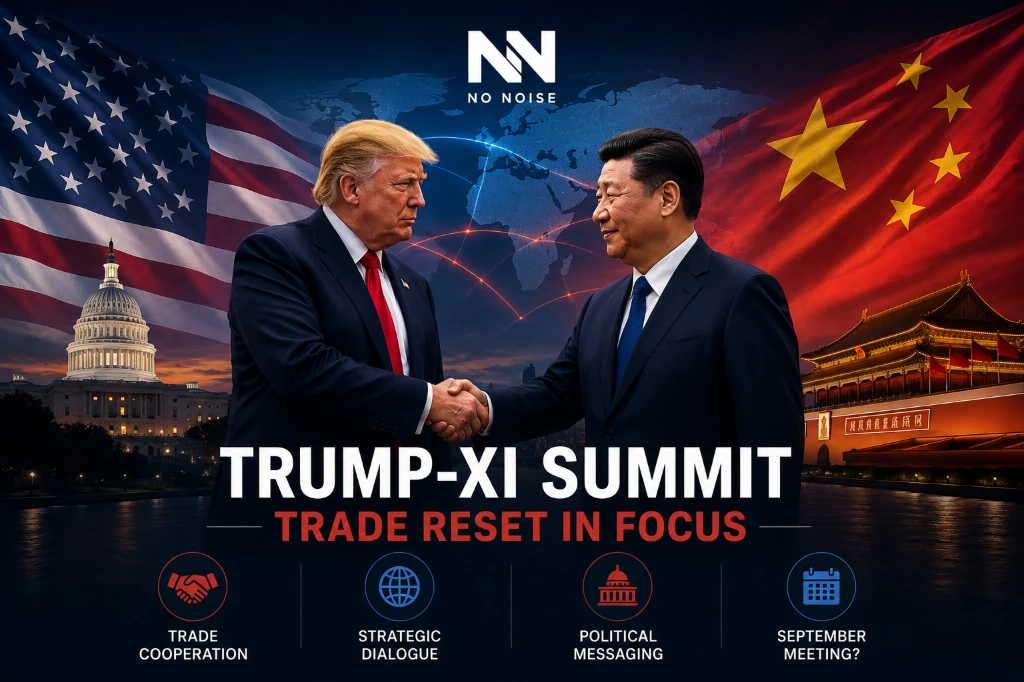
Trump’s Beijing visit carried symbolic importance far beyond standard diplomatic protocol. It marked his first official visit to China in nearly a decade, arriving at a time when relations between the two countries remain fragile despite repeated attempts at stabilization.
Over the past several years, Washington and Beijing have clashed over multiple issues including trade restrictions, semiconductor technology, artificial intelligence, Taiwan, military influence in the Indo-Pacific region, and global manufacturing dependency.
Against that backdrop, the optics of Trump and Xi Jinping meeting face-to-face inside Beijing immediately became a major international headline.
Images from the summit showed both leaders engaging in formal discussions, ceremonial meetings, and extended bilateral talks inside highly controlled diplomatic settings. Chinese state media focused heavily on stability, cooperation, and long-term economic partnership, while American coverage centered more on trade outcomes and Trump’s political messaging.
According to CNBC, much of the summit agenda revolved around trade and energy cooperation. Trump claimed both sides had made significant progress during negotiations and described the discussions as productive for both economies.
Although no major treaty or historic agreement was officially announced, analysts noted that the tone of the meetings appeared noticeably less confrontational compared to previous years.
That softer tone alone was enough to influence global market sentiment.
Trade Becomes The Central Theme Of The Summit
Trade remained the defining issue throughout the Beijing meetings.
Speaking to reporters, Trump declared that the United States and China had made “fantastic trade deals” that would benefit both countries economically. The statement quickly circulated across international media platforms and became one of the summit’s most quoted lines.
According to NDTV, Trump also praised Xi Jinping personally, referring to him as a “great leader” and emphasizing their long-standing diplomatic relationship.
The language reflected Trump’s familiar negotiation style — publicly combining personal praise with economic bargaining. Throughout his political career, Trump has often argued that direct leader-to-leader engagement produces better trade outcomes than prolonged bureaucratic negotiations.
For China, however, the approach appeared more measured.
Xi Jinping avoided dramatic public statements and instead focused on themes like strategic stability, balanced economic growth, and long-term cooperation. Chinese officials also emphasized the importance of maintaining stable ties between the world’s two largest economies during a period of global uncertainty.
The renewed trade optimism comes at a crucial moment for international markets.
Global investors have been closely monitoring U.S.-China relations due to ongoing concerns around tariffs, manufacturing disruptions, technology export restrictions, and energy supply instability. Any indication of reduced tensions between Washington and Beijing tends to affect financial markets almost immediately.
Energy discussions reportedly became another major area of focus during the summit, especially as oil prices continue reacting to wider geopolitical developments across Asia and the Middle East.
Even without a finalized agreement, the diplomatic tone itself was enough to create speculation that both governments may be preparing for a more stable phase of negotiations.
Trump Turns Diplomatic Visit Into Political Messaging
While trade dominated official discussions, the summit’s political impact expanded dramatically after Trump publicly criticized President Joe Biden during the visit.
In one of the summit’s most controversial moments, Trump stated that the United States had been “in decline” under Biden’s leadership. He suggested that his administration was now rebuilding American influence through stronger negotiations and international engagement.
The remark instantly transformed what had been a largely diplomatic event into a political headline inside the United States.
According to India Today, Trump’s statement redirected media attention toward domestic American politics and reinforced his broader campaign narrative ahead of the election season.
Critics argued that using a major diplomatic summit to attack a political rival risked politicizing international relations. Supporters, however, viewed the comment as consistent with Trump’s long-standing messaging around economic nationalism and American decline under previous leadership.
The moment also highlighted a growing trend in global diplomacy where international appearances increasingly function as political campaign platforms.
Modern summits are no longer limited to behind-the-scenes negotiations. Every statement, image, and gesture is now instantly distributed across social media, financial news networks, and political commentary platforms worldwide.
As a result, diplomatic meetings often serve multiple purposes simultaneously:
- international negotiation,
- domestic political signaling,
- media narrative management,
- and economic messaging.
The Beijing summit became a clear example of that overlap.
Xi Jinping Maintains A Carefully Controlled Response
Unlike Trump’s highly public and aggressive style, Xi Jinping maintained a far more controlled diplomatic posture throughout the summit.
Chinese state media coverage focused less on political confrontation and more on themes like stability, mutual respect, and strategic cooperation. Xi avoided directly responding to Trump’s remarks about Biden and instead emphasized broader long-term goals for bilateral relations.
This difference in communication style was noticeable throughout the visit.
Trump frequently used emotionally charged language designed to dominate headlines, while Xi’s messaging remained calculated and institution-focused. Political analysts noted that the contrast reflected the broader strategic differences between the two governments.
For Beijing, maintaining economic stability and avoiding unpredictable escalation remains a critical priority, especially as China continues facing pressure related to slowing growth, global manufacturing shifts, and international trade restrictions.
Chinese officials also understand that global investors carefully interpret every signal emerging from high-level U.S.-China meetings.
A stable diplomatic appearance helps reassure markets even when underlying disagreements remain unresolved.
That may explain why both governments appeared interested in projecting at least temporary stability despite continuing tensions behind closed doors.
Why The Summit Matters Beyond Headlines
Although no breakthrough agreement emerged from the Beijing meetings, the summit still carries major geopolitical significance.
The United States and China remain deeply interconnected economically despite years of rivalry and strategic competition. Any shift in relations between the two countries affects global trade routes, technology development, financial markets, manufacturing chains, and energy prices.
The summit also arrives during a period when multiple global crises are unfolding simultaneously:
- ongoing conflicts in different regions,
- energy market volatility,
- semiconductor competition,
- AI regulation battles,
- and uncertainty around future global economic growth.
Against that backdrop, even symbolic diplomatic engagement between Washington and Beijing becomes globally important.
The possibility of a future Washington summit in September could now become the next major checkpoint in U.S.-China relations. If that meeting officially takes place, it may indicate that both governments are serious about reopening more structured negotiations after years of instability.
However, major disagreements remain unresolved.
Taiwan continues to be one of the most dangerous flashpoints between the two powers. Technology restrictions, military influence in Asia, cybersecurity concerns, and trade imbalances also remain deeply sensitive topics.
For now, the Beijing summit appears less like a final resolution and more like the beginning of another long diplomatic cycle between two competing global superpowers.
What happens next may shape not only U.S.-China relations, but also the direction of the global economy over the coming years.